Undergraduate Education
When Harbin Institute of Technology opened its doors in 1920, physics was already on the timetable. A century later, the School of Physics remains one of the places in this engineering university where the foundations are laid hardest and hands-on work begins earliest.
The School offers two national first-class undergraduate programmes — Applied Physics (应用物理学) and Optoelectronic Information Science and Engineering (光电信息科学与工程)— together with three distinctive routes: the National Strengthening Basic Disciplines Plan (强基计划), the Top-Notch Talent Training Plan 2.0 Base (基础学科拔尖学生培养计划2.0基地), and a joint Sino-Russian programme. Some 480 undergraduates are enrolled, within a student body of 964. The School has just over 100 full-time faculty, including 40 professors and 50 associate professors, two academicians (两院院士) and more than 20 holders of national talent titles. It hosts five national and six provincial or ministerial research platforms. Optics is the only national key discipline in the sciences at HIT.
Five commitments shape our training.
Solid foundations. Professional foundations come first. Five national first-class courses, five provincial teaching masters (省教学名师) and a teaching innovation team recognised by the Ministry of Industry and Information Technology (工信部) hold up the first classroom — large lectures for the core, small-group seminars for the argument.
Intensive practice. About a quarter of the credit requirement is laboratory, project and research work. The National Experimental Teaching Demonstration Centre runs 23 laboratory courses and 189 experiments on some 2,600 instruments across 2,580 m², and serves more than 70 non-physics programmes across the university. Research training is built around project-based learning and disciplinary competition.
Rigorous process. Undergraduate and graduate courses are connected in an integrated bachelor’s–master’s–doctoral pathway, with continuous assessment and genuine mid-course elimination; academic support reaches students at risk early and is effective in all cases.
Original thinking. Undergraduates rotate through research groups and join faculty teams working on real problems — the “zero to one” questions, and the chokepoint (卡脖子) issues that hold back key technologies. Students can publish papers, file patents and register software copyrights before they graduate.
Global horizons. The Hong Jing Lecture Series (洪晶讲堂), cultural enrichment lectures and the International Physics Summer School run throughout the year, and each year brings internationally renowned scholars — Nobel laureates among them — to campus.
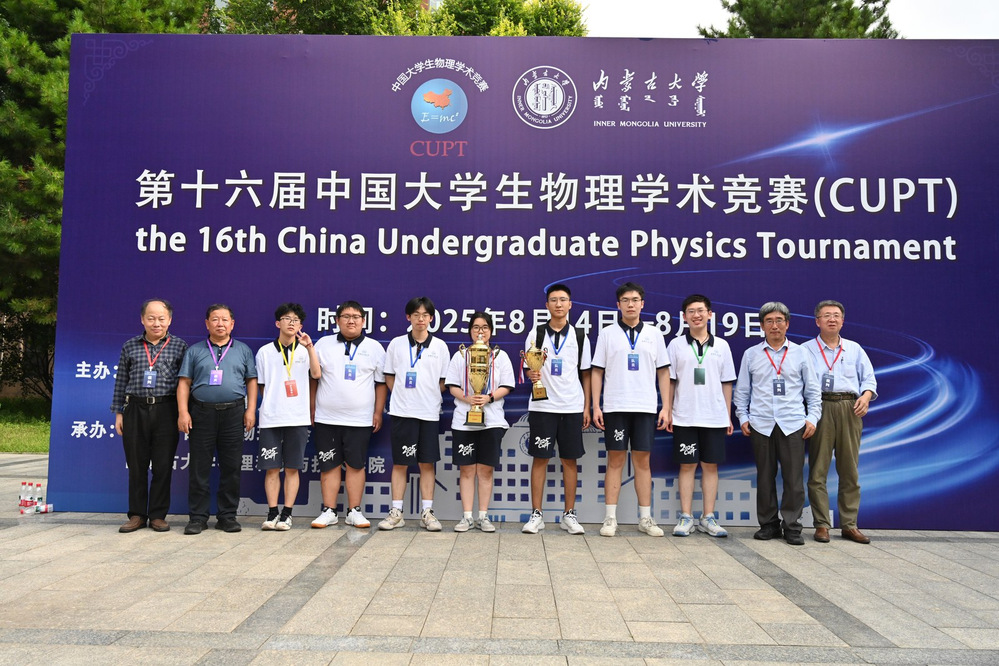
Fig. 1HIT’s team at the 16th China Undergraduate Physics Tournament, August 2025.
The School’s joint Applied Physics programme with St Petersburg State University is taught by Russian faculty for more than two-thirds of its specialised courses, supported by 15 full-time foreign experts, nine of whom hold national-level talent appointments. Intake rose to 150 students a year from 2025, and its first cohort of 46 graduated in 2026. Students also join the winter school in St Petersburg and the “3+1+1” pathway and summer programme at the National University of Singapore; the International Physics Summer School has run for eight editions.
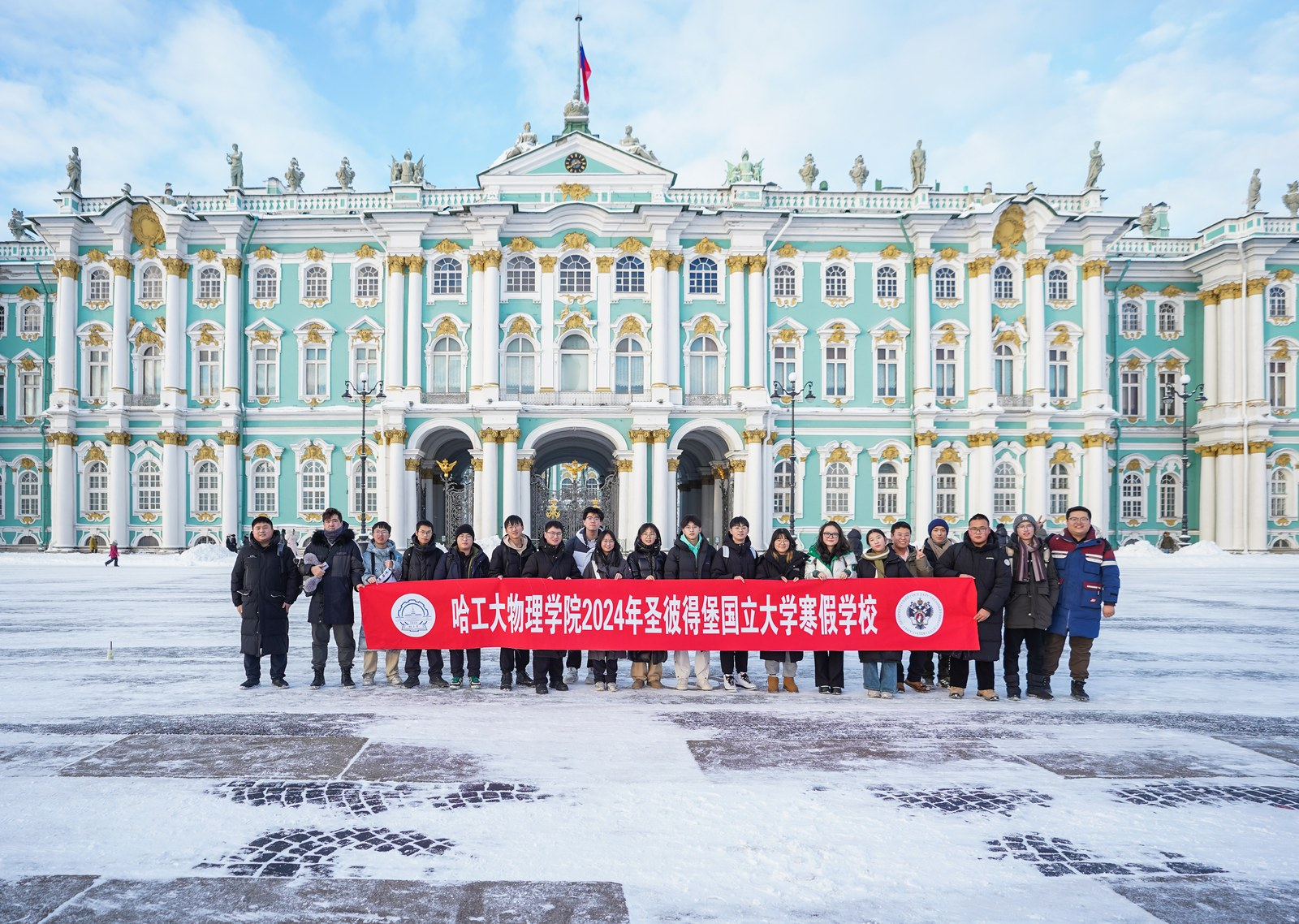
Fig. 2Undergraduates at the winter school of St Petersburg State University.
More than 88 per cent of the class of 2026 continue to postgraduate study, and the destination rate is 100 per cent, with 34.23 per cent joining key national employers. At the China Undergraduate Physics Tournament (CUPT, 中国大学生物理学术竞赛), HIT teams have made 15 appearances since 2012, reached the final 13 times and won the national championship 10 times. The School holds five first prizes and three second prizes in the Heilongjiang Provincial Teaching Achievement Awards. Alumni include Lü Yueguang, academician of the Chinese Academy of Engineering; Pei Zhaoyu, deputy chief designer of the third phase of China’s lunar exploration programme; Cheng Jinguang, deputy director of the Institute of Physics, Chinese Academy of Sciences; and Ma Jing, winner of a National Technological Invention Award.
In 1952 Hong Jing (洪晶) took on the School’s first research students. The habit formed then has outlasted every reform since: small cohorts, real problems, and mastery of the instrument before any claim to publish.
The discipline holds a first-level doctoral programme and a postdoctoral research station, organised around four sub-disciplines: optics (光学), condensed matter physics (凝聚态物理), plasma physics (等离子体物理), and particle and nuclear physics (粒子物理与原子核物理). In 1981 optics became one of the first five doctoral programmes in the field; in 1987 it was named one of the country’s three national key disciplines in optics — the only national key discipline in the sciences at HIT. Physics gained its first-level doctorate in 2009.
Across the Harbin, Weihai and Shenzhen campuses the discipline has 133 supervisors (90, 17 and 26 respectively), 82 of whom are doctoral supervisors, supported by more than 150 full-time faculty and 33 national-level talent appointees. The School is a major participant in the Space Environment Simulation and Research Infrastructure (空间环境地面模拟装置), China’s first national major science and technology infrastructure in the space sector, and led or co-led four of its subsystems: the particle accelerator, space plasma environment simulation, space electronics, and microanalysis. It also hosts two national key laboratories — Space Environment and Material Interaction, and Laser Space Information — and the China–Russia Belt and Road Joint Laboratory for Advanced Energy and Power Technology.
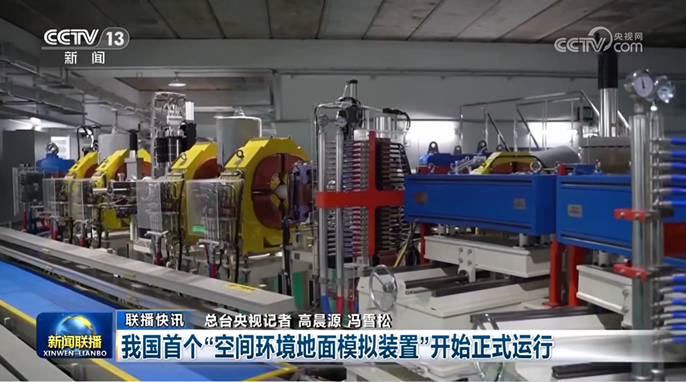
Fig. 3The Space Environment Simulation and Research Infrastructure (空间环境地面模拟装置), China’s first national major science and technology infrastructure in the space sector; physics staff led or co-led four of its subsystems.
An integrated pathway. Master’s candidates take 31 credits and doctoral candidates 37, of which at least 14 must be disciplinary core courses and at least 6 at doctoral level. The doctoral thesis committee is formed in the second year, not the fourth. Direct entry to the doctorate and a fast-track channel (快响通道) run alongside.
A rigorous exit. Every thesis passes through proposal, mid-term review, pre-defence, external blind review and defence, after which the province re-examines the bottom 5 per cent. Interdisciplinary projects carry a secondary supervisor (副导师). Doctoral candidates must produce one paper in Physical Review Letters, Nature or Science; or three papers in Q2 journals or above; or two such papers plus one further item, such as a granted patent.
To date the Hong Jing Lecture Series has held 60 sessions in 2026. The student-run Wuli Shuo (悟理说) salon and the fortnightly Gewu Zhili (格物致理) graduate salon keep the argument going, the Physics+ (物理+) Interdisciplinary Doctoral Forum brings physics doctoral students together with materials, instrumentation and electrical engineering, and the Ideas Fund (点子基金) backs students’ own research proposals.
The joint master’s programme with St Petersburg State University runs on a “3+0” model: Russian is a core course, and Russian faculty teach condensed matter theory, density functional theory, spectroscopy and artificial intelligence in physics. More than 20 Russian experts hold long-term appointments at the School, among them academicians and a winner of the Chinese Government Friendship Award. Doctoral students take part in the Sino-Russian Young Physicists Workshop, apply for China Scholarship Council joint training (four in 2024), and one is co-supervised with ITER.
Over the past five years the School has won five first prizes for graduate teaching achievement in Heilongjiang Province, together with five provincial teaching-reform projects, two approved graduate textbook projects and four courses co-taught with leading international scholars. Our doctoral students have received the Wang Daheng Optical Award (王大珩光学奖), a national award made to no more than 30 people a year, and published in journals including Nature, Science, Physical Review Letters; two have won provincial natural science foundation grants for doctoral students.

